

By Greg White, Unity Home Inspections
A 4-point inspection is a required evaluation for many homeowners in Florida, especially when applying for insurance. It reviews four primary systems: the roof, electrical, plumbing, and HVAC. Knowing which issues commonly cause failures helps protect your insurance eligibility and home safety. This article outlines the typical causes of failure, explains why each system matters, and offers practical steps to prepare. We also explain how Unity Home Inspections can support you through the process.
Which Components Are Evaluated in a Florida 4-Point Inspection?
A Florida 4-point inspection assesses four main areas of a home: the roof, the electrical system, the plumbing system, and the HVAC system. Each plays a key role in the home’s safety and function.
| Component | Evaluation Criteria | Importance |
|---|---|---|
| Roof | Condition, age, and visible damage | Protects the home from weather elements |
| Electrical System | Wiring, panels, and grounding | Ensures safety and compliance with codes |
| Plumbing System | Leaks, corrosion, and functionality | Prevents water damage and health hazards |
| HVAC System | Performance and age | Maintains indoor comfort and air quality |
Recognizing how these systems are evaluated helps you spot issues before the inspector arrives.
Why Is Each System Important for Insurance and Safety?
Each system covered by a 4-point inspection directly affects both insurance risk and occupant safety. The roof shields the home from weather; the electrical system controls safe power distribution; plumbing provides clean water and waste removal; and HVAC maintains comfort and indoor air quality.
Unaddressed problems in any of these systems can raise premiums or result in denial of coverage. Prioritizing maintenance and timely repairs reduces risk and supports insurance compliance.
What Are the Most Common Roof Failures That Cause Inspection Failure in Florida?
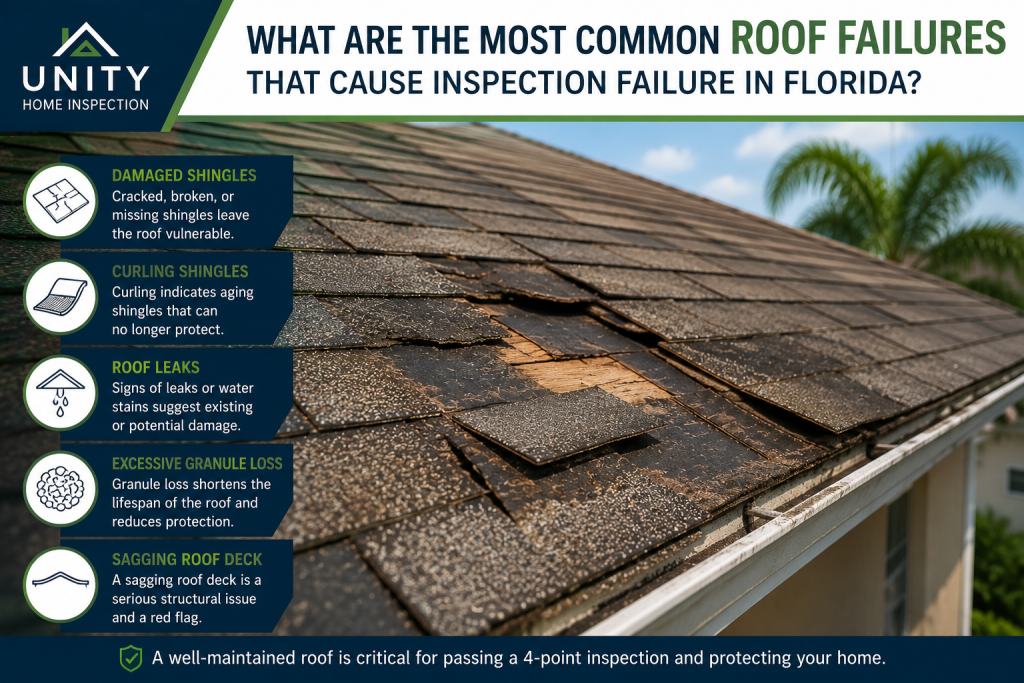
Roof issues are a leading reason for 4-point inspection failures in Florida. Key problems to watch for include:
- Missing Shingles: This can expose the underlying structure to water damage.
- Damaged Flashing: Improperly sealed flashing can lead to leaks.
- Visible Leaks: Any signs of water intrusion can indicate serious problems.
- Age of the Roof: Many insurance companies may require roofs to be less than 20 years old for coverage, but this can vary by insurer.
Fixing these issues before inspection reduces the risk of failure.
How Does Roof Age and Condition Affect Inspection Outcomes?
The roof’s age and visible condition strongly influence inspection results. Insurers commonly prefer roofs under about 20 years of age and will scrutinize visible wear or damage.
A well-maintained roof is more likely to pass. Regular checks and timely maintenance help ensure the roof meets insurer expectations.
What Specific Roof Issues Lead to Failed Inspections?
Specific roof problems that often cause failures include:
- Visible Damage: Cracks, holes, or other visible damage can indicate structural problems.
- Condition of Roofing Materials: Deteriorating materials may not provide adequate protection.
- Improper Installation: Roofs that were not installed correctly may fail to meet safety standards.
Addressing these defects—repairing damage, replacing worn materials, and correcting poor installations—improves the chances of passing a 4-point inspection.
How Do Electrical System Problems Lead to 4-Point Inspection Failures?
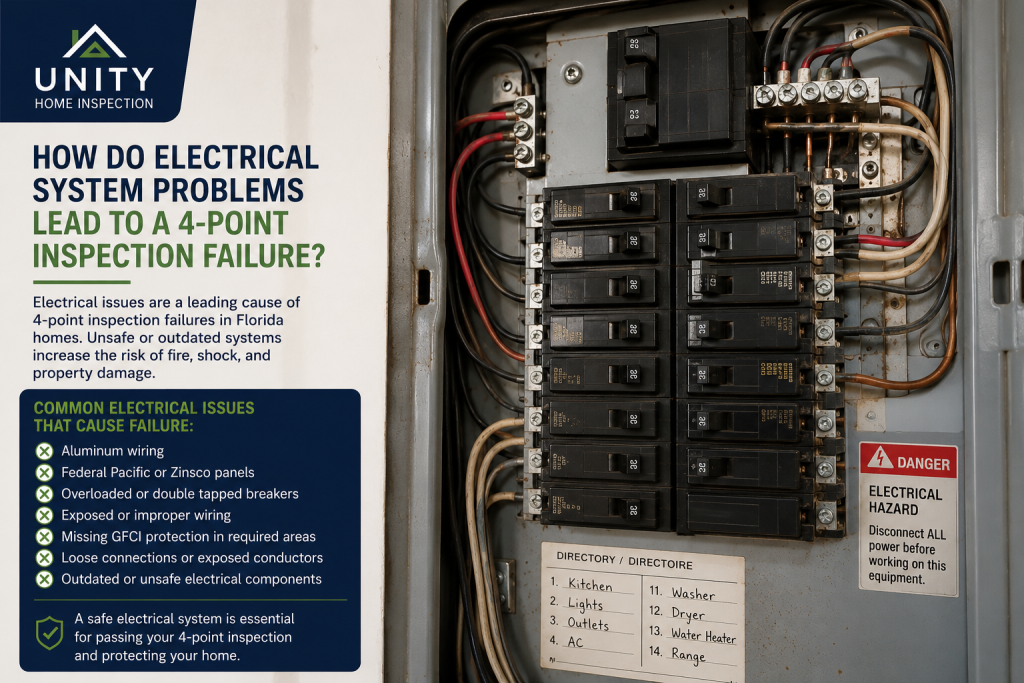
Electrical defects are another common cause of inspection failures. Issues such as outdated wiring, improper grounding, and faulty panels present clear safety hazards.
Homeowners should watch for these common electrical problems:
- Outdated Wiring Systems: Older wiring may not meet current safety standards.
- Improper Grounding: This can lead to electrical shocks or fires.
- Insufficient Outlets: A lack of outlets can lead to overloading circuits.
Correcting these issues is essential to reduce fire risk and increase the likelihood of passing the inspection.
What Electrical Wiring and Panel Issues Are Most Frequently Cited?
Inspectors frequently note the following electrical concerns:
- Outdated Wiring Systems: These can pose fire hazards and fail to meet code requirements.
- Improper Grounding: Essential for safety, improper grounding can lead to dangerous situations.
- Insufficient Outlets: Homes should have enough outlets to prevent overloading circuits.
Consider having a qualified professional evaluate your electrical system to identify and correct these items.
How Does Electrical Safety Impact Insurance Approval?
Electrical safety is a major factor in insurance approval. Insurers often require homes to meet certain electrical standards before offering coverage.
If electrical hazards are present, you may face higher premiums or denial of coverage. Prioritizing electrical repairs helps protect both safety and insurability.
What Plumbing Failures Commonly Cause 4-Point Inspection Rejections in Florida?
Plumbing defects can also trigger inspection rejections. Common issues include:
- Leaks: Any signs of leaks can indicate serious plumbing problems.
- Corrosion: Corroded pipes can lead to water damage and health hazards.
- Old Plumbing Materials: Homes with outdated plumbing systems may not meet current standards.
Repairing leaks and replacing deteriorated components is often necessary to pass a 4-point inspection.
How Do Plumbing Failures Affect Home Safety and Insurance?
Plumbing failures can harm home safety and affect insurance coverage. Leaks may cause water damage, mold growth, and related health risks.
Insurers may require repairs before granting coverage. Regular inspections and prompt repairs help prevent escalation and protect your policy options.
What HVAC System Deficiencies Result in 4-Point Inspection Failures?
HVAC shortcomings can also cause inspections to fail. Typical problems include:
- Poor Performance: Inefficient systems may not provide adequate heating or cooling.
- Safety Hazards: Faulty systems can pose fire risks or lead to carbon monoxide leaks.
- Age of the System: Older systems may not meet current efficiency standards, often considered to be systems older than 15 years.
Keeping HVAC equipment maintained and repairing faults promptly reduces the chance of failure.
How Does HVAC Functionality Influence Inspection Results?
Inspectors check that HVAC systems operate safely and effectively. Insurers generally expect systems to be in good working order to qualify for coverage.
Regular servicing and timely repairs keep systems efficient and help meet insurance and safety standards.
What Are the Insurance Implications of Failing a 4-Point Inspection in Florida?
Failing a 4-point inspection can affect insurance significantly. Homeowners may face higher premiums, denial of coverage, or required repairs before coverage is approved.
Knowing these consequences encourages homeowners to address issues proactively to protect both safety and insurance options.
Can Failed Items Be Repaired to Pass Future Inspections?
Yes—many failed items can be repaired so a home can pass a future inspection. Typical repair paths include:
- Roof Repairs: Addressing leaks and replacing damaged shingles can improve roof condition.
- Electrical Updates: Upgrading wiring and ensuring proper grounding can enhance safety.
- Plumbing Fixes: Repairing leaks and replacing corroded pipes can improve plumbing functionality.
Consulting with qualified professionals will help you determine the most effective repairs for your situation.
For assistance with 4-point inspections, Unity Home Inspections offers specialized services in Florida, including 4-point inspections, full home inspections, and wind mitigation inspections. Ensuring your home meets required standards can save you time and money over the long term.